How to Generate Cryptographically Secure Random Numbers
Not all random number generators are created equal. JavaScript Math.random() is fast but predictable — given enough output, an attacker can determine future values. For anything security-related — password salts, encryption keys, lottery draws, unique IDs — you need cryptographically secure randomness.
How the generator works
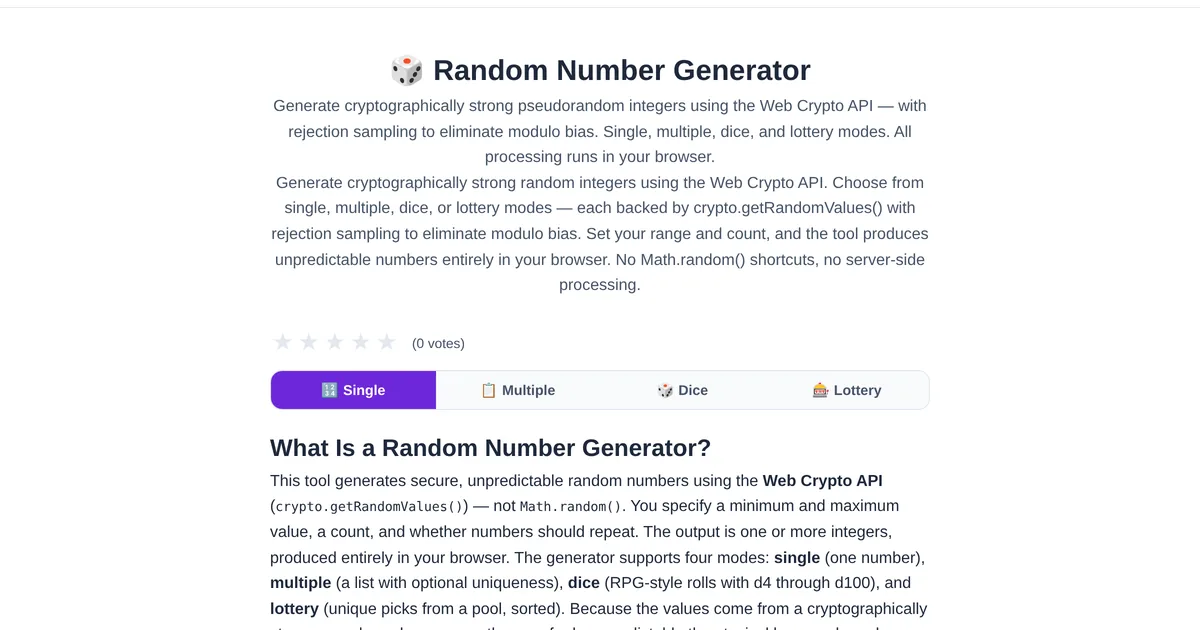
The ToolStand Random Number Generator uses crypto.getRandomValues(), the browser cryptographic random number generator backed by operating system entropy sources. This is the same randomness used by HTTPS, password managers, and encryption libraries. The generator offers multiple modes: single number (between min and max), multiple numbers (specify count), dice rolls (d4, d6, d8, d10, d12, d20, d100), and lottery picks (unique random selections from a pool).
When secure randomness matters
Password generation. Combined with the Password Generator, secure random numbers underpin strong password creation. Giveaways and contests. If you are picking a random winner, using a predictable RNG opens you to accusations of rigging. Crypto-random selection is provably fair. Game mechanics. For games where randomness affects outcomes (loot drops, card shuffles, dice rolls), secure randomness prevents players from predicting or exploiting the random sequence. Unique IDs. Combined with the UUID Generator for database primary keys.
Explore the full collection of free tools at toolstand.io. Free, forever. No sign-up. No download. Just tools that work.