How to Measure and Improve Your Reaction Time
Reaction time is the interval between a stimulus and your response to it. It is measured in milliseconds and varies by age, alertness, and training. Professional athletes and fighter pilots have reaction times below 150 ms. The average person sits at 200-250 ms. Here is how to measure yours, understand what the number means, and improve it.
How the Reaction Time Test works
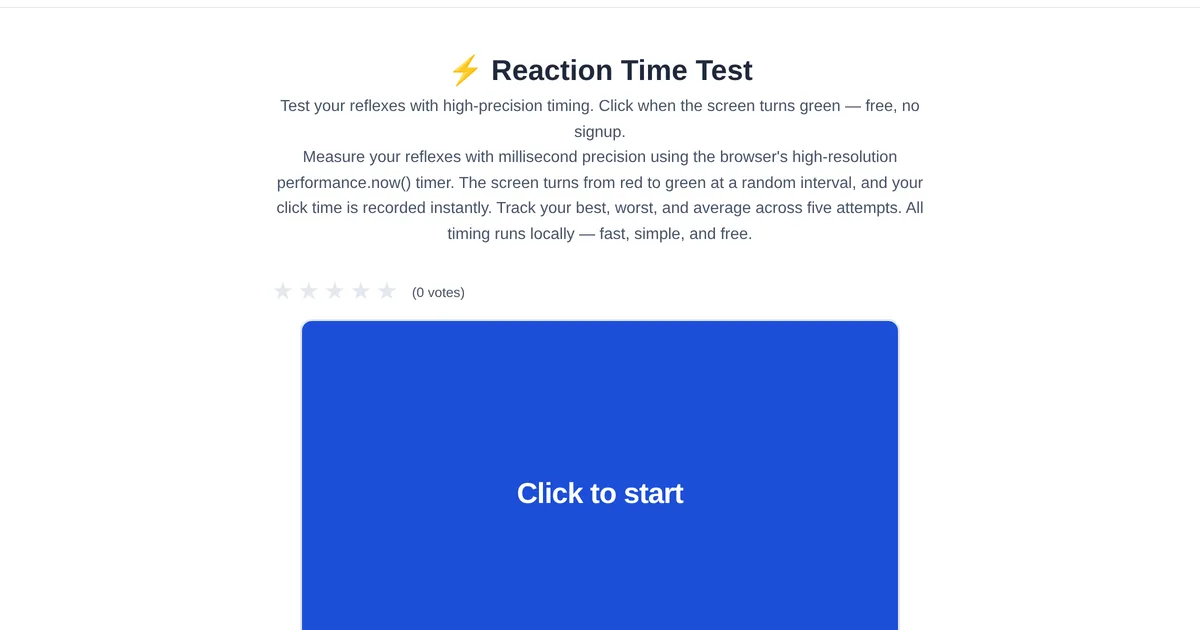
The ToolStand Reaction Time Test uses the browser performance.now() API for sub-millisecond precision. The screen turns red, then green at a random interval to prevent anticipation. You click or tap as fast as possible. The tool records each attempt and calculates your average, median, and best times. Take at least 10 attempts for a reliable measurement.
What your score means
Below 180 ms: Elite. Top 5 percent of the population. 180-220 ms: Excellent. Above average for athletes and competitive gamers. 220-280 ms: Average. Normal adult range. 280-350 ms: Below average. May improve with training. Above 350 ms: Significantly below average. Consider factors like sleep deprivation or medication effects.
Factors that affect reaction time
Sleep. A single night of poor sleep adds 20-50 ms to your reaction time. Age. Reaction time peaks in the mid-20s and declines about 2-6 ms per decade after 30. Caffeine. Moderate caffeine (50-200 mg) temporarily improves reaction time by 10-30 ms.
Training for faster reactions
Use the test as a training tool, not just a measurement. Take 20 attempts daily for two weeks and track the trend. Most people improve by 20-50 ms over consistent training. Pair it with the Snake Game for dynamic, decision-based reaction training.
Explore the full collection of free tools at toolstand.io. Free, forever. No sign-up. No download. Just tools that work.